


What Are Laser Cleaning Machines?
Surface cleaning might not sound glamorous, but it’s the backbone of modern manufacturing, restoration, and maintenance. Without clean surfaces, coatings fail, welds weaken, and products lose quality. This is where laser cleaning machines step into the spotlight.
Laser cleaning technology has quickly evolved from a niche innovation into a mainstream industrial solution. Think of it as using light instead of force or chemicals to clean surfaces—precise, powerful, and surprisingly gentle at the same time.
Why Surface Cleaning Matters in Modern Industry
A dirty surface is like trying to paint over dust—it just doesn’t work. Whether you’re preparing metal for welding or restoring a historic monument, surface cleanliness directly impacts durability, safety, and appearance.
The Rise of Laser-Based Cleaning Solutions
Traditional cleaning methods often create waste, damage materials, or require harsh chemicals. Laser cleaning flips the script by offering a cleaner, greener, and more controllable alternative.
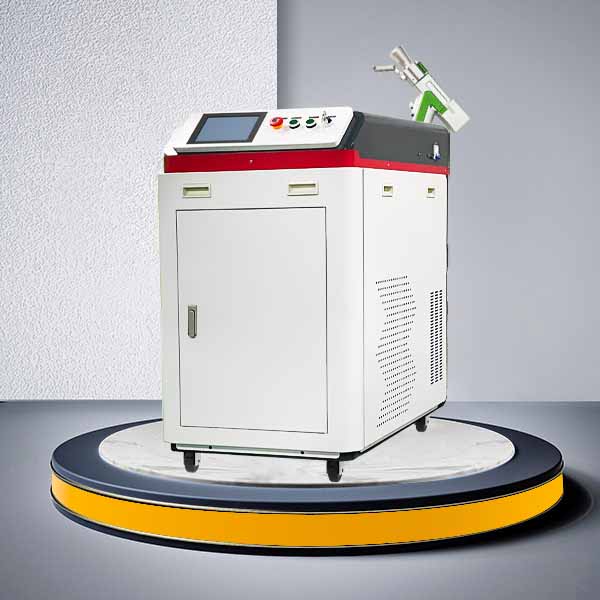
What Is a Laser Cleaning Machine?
Simple Definition in Plain English
A laser cleaning machine is a device that uses high-energy laser beams to remove unwanted materials—such as rust, paint, oil, or contaminants—from a surface without damaging the base material.
In simpler terms, it’s like using a super-precise light eraser that removes dirt layer by layer.
How Laser Cleaning Differs from Traditional Methods
Unlike sandblasting or chemical cleaning, laser cleaning doesn’t rely on abrasion or solvents. There’s no grinding, soaking, or scraping. Just light doing the hard work.
How Do Laser Cleaning Machines Work?
The Science Behind Laser Ablation
Laser cleaning works through a process called laser ablation. When the laser hits the contaminated surface, the unwanted layer absorbs the laser energy and rapidly heats up.
Interaction Between Laser and Contaminants
The contaminants either vaporize or are ejected as fine particles. Since different materials absorb laser energy differently, the laser can be tuned to target only the unwanted layer.
Why the Base Material Remains Undamaged
The underlying material reflects or dissipates the laser energy, staying cool and intact. It’s precision cleaning at a microscopic level.
Main Components of a Laser Cleaning Machine
Laser Source
This is the heart of the system. Fiber lasers are the most common due to their efficiency, stability, and long lifespan.
Control System
The control unit allows operators to adjust parameters like power, pulse frequency, and scanning speed.
Optical and Scanning System
Mirrors and scanners guide the laser beam accurately across the surface, ensuring uniform cleaning.
Cooling and Safety Systems
Cooling systems prevent overheating, while safety features protect operators from laser exposure.
Types of Laser Cleaning Machines
Handheld Laser Cleaning Machines
Portable and flexible, these are ideal for maintenance, mold cleaning, and on-site rust removal.
Automated and Robotic Laser Cleaning Systems
Designed for high-volume production lines, these systems deliver consistent results with minimal human intervention.
Pulsed vs Continuous Wave Laser Cleaning
Pulsed lasers offer higher precision, while continuous wave lasers are better for heavy-duty cleaning tasks.
Materials That Can Be Cleaned Using Laser Technology
Metals
Steel, aluminum, copper, and titanium respond exceptionally well to laser cleaning.
Stone, Concrete, and Cultural Artifacts
Laser cleaning is widely used in restoration projects because it removes grime without harming delicate surfaces.
Plastics and Composites
With the right settings, even sensitive materials can be safely cleaned.
Applications of Laser Cleaning Machines
Rust and Oxide Removal
Laser cleaning removes rust without weakening the metal underneath.
Paint and Coating Removal
Perfect for selective paint stripping without damaging the substrate.
Mold and Residue Cleaning
Ideal for injection molds and industrial tooling.
Pre-Welding and Surface Preparation
Clean surfaces mean stronger welds and better adhesion.
Heritage Restoration
Museums and conservators love laser cleaning for its precision and gentleness.
Advantages of Laser Cleaning Machines
Non-Contact and Non-Abrasive Cleaning
No physical contact means zero wear and tear.
Environmentally Friendly Process
No chemicals, no waste water, and minimal dust.
High Precision and Selectivity
Target exactly what you want to remove—nothing more.
Low Operating Costs Over Time
While the upfront cost is higher, maintenance and consumable costs are minimal.
Limitations and Challenges of Laser Cleaning
Initial Investment Cost
Laser systems aren’t cheap, especially high-power models.
Safety and Training Requirements
Operators must be trained to handle laser equipment safely.
Material and Surface Limitations
Highly reflective or transparent materials may require special settings.
Laser Cleaning vs Traditional Cleaning Methods
Comparison with Sandblasting
Laser cleaning is cleaner, quieter, and far more precise.
Comparison with Chemical Cleaning
No hazardous waste, no disposal issues, no health risks.
Comparison with Mechanical Cleaning
No abrasion, no tool wear, no surface deformation.
Industries That Benefit Most from Laser Cleaning
Manufacturing and Automotive
From weld prep to maintenance, laser cleaning boosts efficiency.
Aerospace and Defense
Precision and reliability make laser cleaning a top choice.
Shipbuilding and Marine
Effective rust removal without damaging structures.
Electronics and Precision Engineering
Micron-level accuracy for sensitive components.
How to Choose the Right Laser Cleaning Machine
Power and Wavelength Considerations
Higher power for heavy rust, lower power for delicate surfaces.
Automation Level
Handheld for flexibility, automated for production lines.
Budget and ROI Evaluation
Consider long-term savings, not just upfront cost.
Safety Considerations When Using Laser Cleaning Machines
Operator Safety
Protective eyewear and proper training are essential.
Workplace and Environmental Safety
Ensure proper ventilation and controlled work zones.
Conclusion
Laser cleaning machines represent a major leap forward in surface treatment technology. They combine precision, efficiency, and sustainability in a way traditional methods simply can’t match. Whether you’re removing rust, restoring artifacts, or preparing surfaces for manufacturing, laser cleaning offers a future-ready solution that’s clean in every sense of the word.
For more information please contact us.